Grace Emily Manning
Artist
About
︎

Grace Emily Manning
Artist
About
︎
Projects for Landscapes
Golden Valley, Herefordshire The Golden Valley Sundial Project
Cerne Abbas, Dorset Consequences - Radical Ritual
Consequences Workshops
Birmingham & The Black Country
Alders of Woodbrook
The Walsall Camel Sanctum Cloth
Sanctum of The One Eyed Toad with General Public
The Birmingham Allotment Project
TBAP Dye Process
Swanscombe Marshes, Thames Estuary, Kent
Swansula
Swansula Quartz
Relics of Estuarine Magic
Swansula Sail
Muggins
Brownfield Sister
Flint Instrument - Sum Of All It’s Past
Plastic Bone
LUNMES 2045
Padstow, Cornwall
The Tales of Cetus
The Plastic Age
Ghost Gear Poppets
Cetus Belly Of The Whale
Glastonbury, Somerset Wildflower of Avalon
Red List Mother
The Park Macrame
Installation
Choose Love - The Light WithinKite Spirit and
The Patchwork
Storytelling Quilt with
Sita Brahmachari
Drawing
Drawings, 1Drawings, 2
Concept / Technical
Painting
Blue Nacres in MoonlightIris 1,2
Overview
Cultures
Untitleds
Moving Image
RoseTale of Pupa
White Moths
Inside Tide
Embodying Voice
Central Vessel
Patchwork Storytelling
Project
Worry Angels
The Art of Transatlantic
Inclusion
GEM Eco Studio
A material studio working with plant, pigment and placeNatural dyes · Art materials · Workshops · Commissions
Ghost Gear Poppets
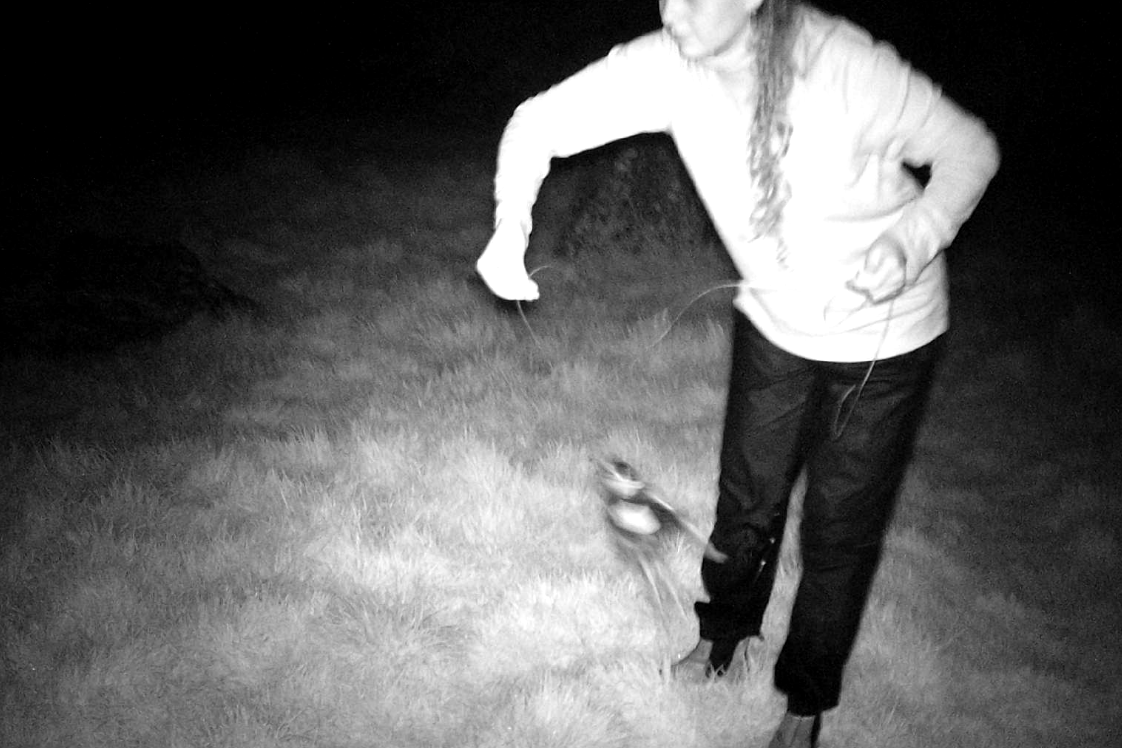

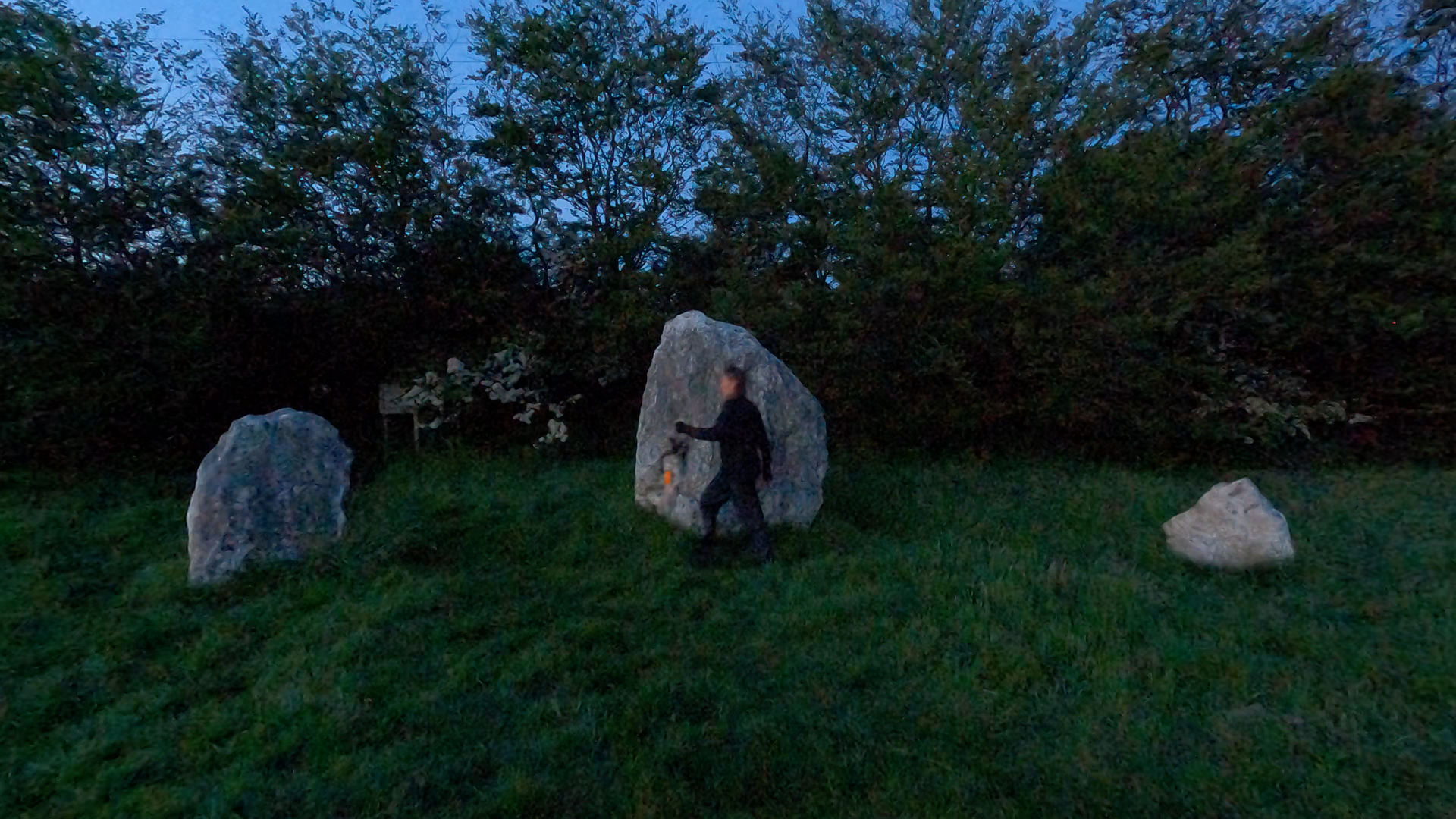
Duloe Stone Circle, Duloe, Cornwall, UK
Infared camera
Span and woven between the stones, energised by ancient quartz.
Ghost Gear Poppets was a site-responsive project created for Beach Guardian CIC and the Seven Bays of North Cornwall, Padstow, in collaboration with artist Andrew Whittle.
Conjured in the lead-up to the G7 Summit in June 2021, the project drew inspiration from the folklore, witchcraft and Old Ways of the West Country. Working with local school groups, we transformed ghost gear and plastic waste collected from the Seven Bays into a series of protective poppets and talismans.
Through making and storytelling, discarded materials from the shoreline were reimagined as magical guardians; part warning, part protection spell. The project invited participants to reflect on the hidden impacts of marine pollution while connecting with local traditions of folk belief, craft and care for the coast.
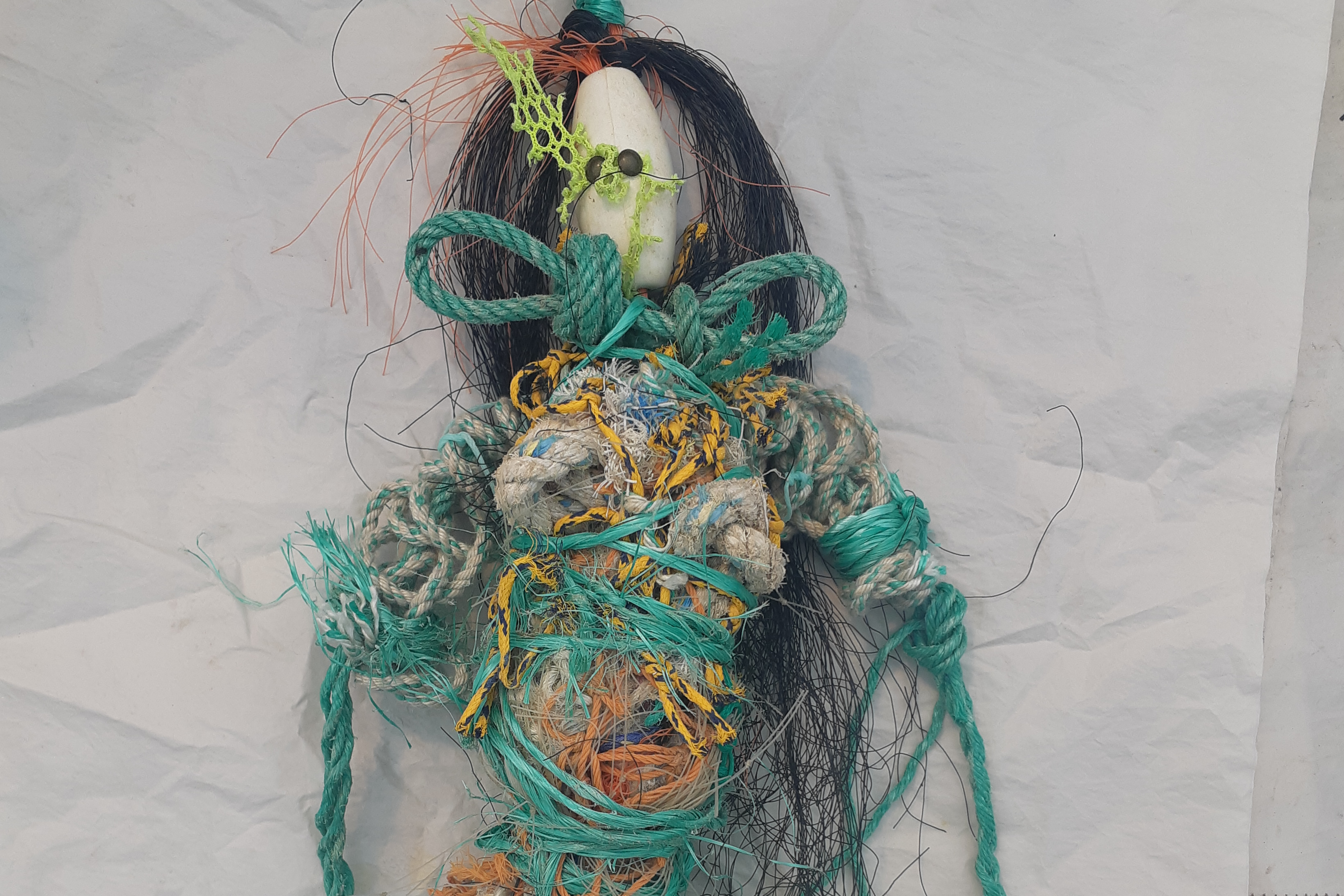


Poppets made from Ghost Gear aid our cause through magic.
They are custodian spirits brought ashore with a message,
they know what is occurring in the Ocean deep.
Inside each belly is a charm,
Binding the waste where it can do no harm.
Set free, they journeyed by land and by sea to haunt the G7 summit.

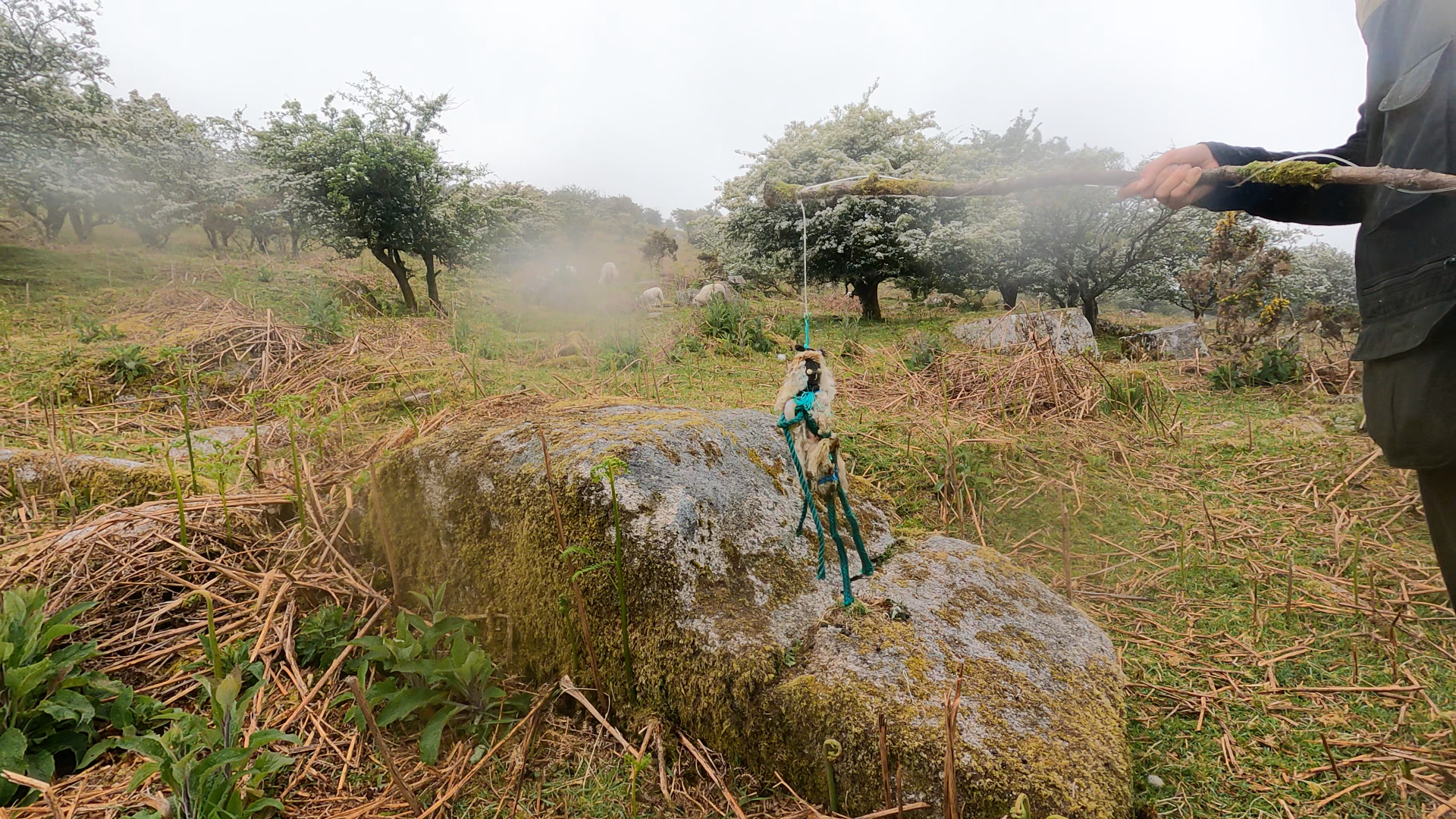
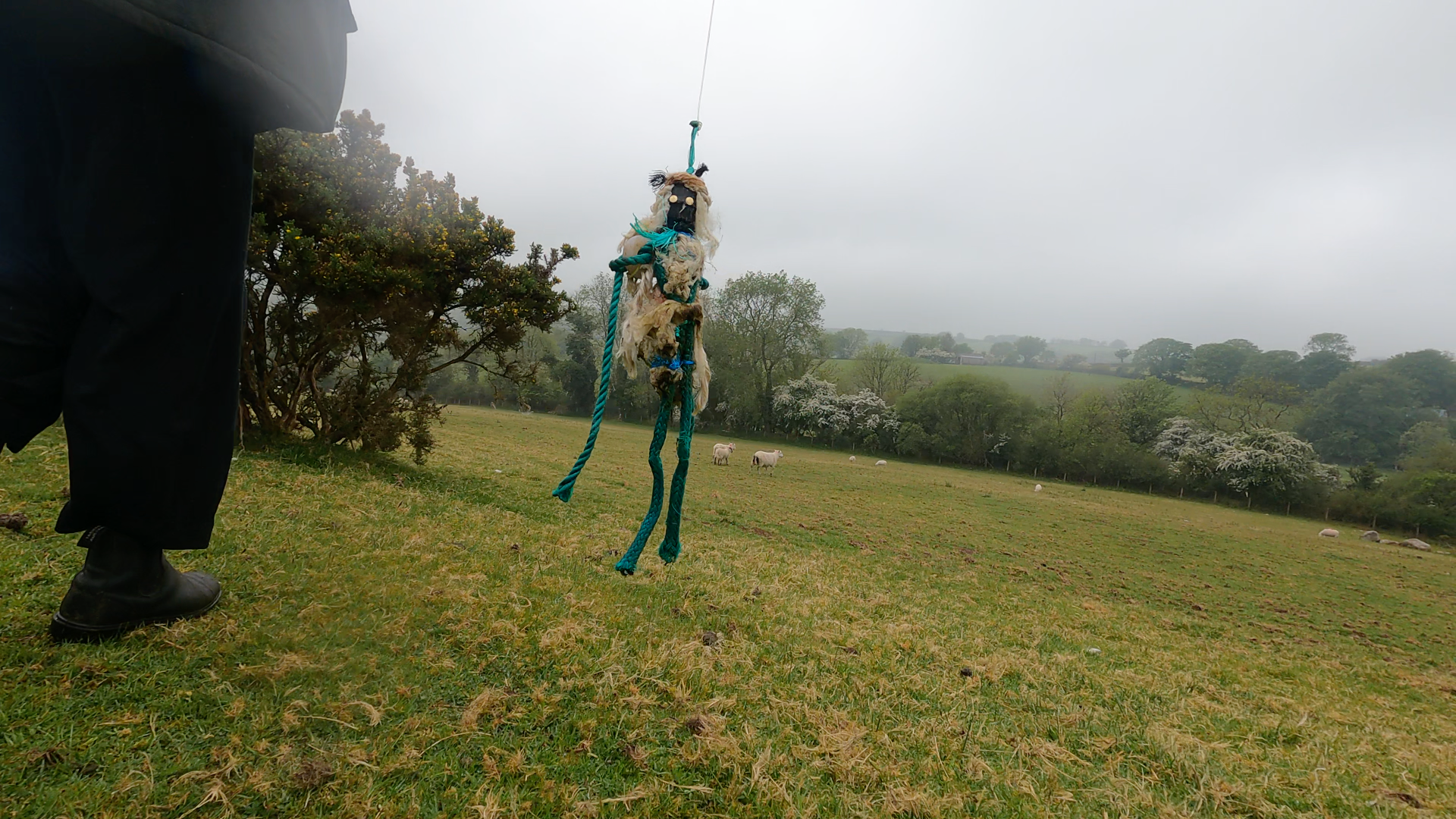


Following the workshops, I created my own Ghost Gear Poppet - an oracle born from the sea.
With my brother by my side, we cycled across Cornwall carrying the Ghost Gear Oracle Head alongside the poppets made by the school children. Together, we journeyed to the ancient landscapes of Bodmin Moor; visiting Neolithic sacred sites, stone circles and holy wells.
There, amongst the granite tors and old places of gathering, the poppets were symbolically cleansed and recharged by the energies of the land. The pilgrimage drew on the folklore and spiritual traditions that remain deeply woven into the Cornish landscape, reconnecting materials gathered from the sea with the ancient stories and spirits of the earth.

Ghost Gear Oracle Head, 2021
Waste plastics cleaned from Cornish beaches by Beach Guardian CIC.
Buoy, rope, net, fishing tackle.

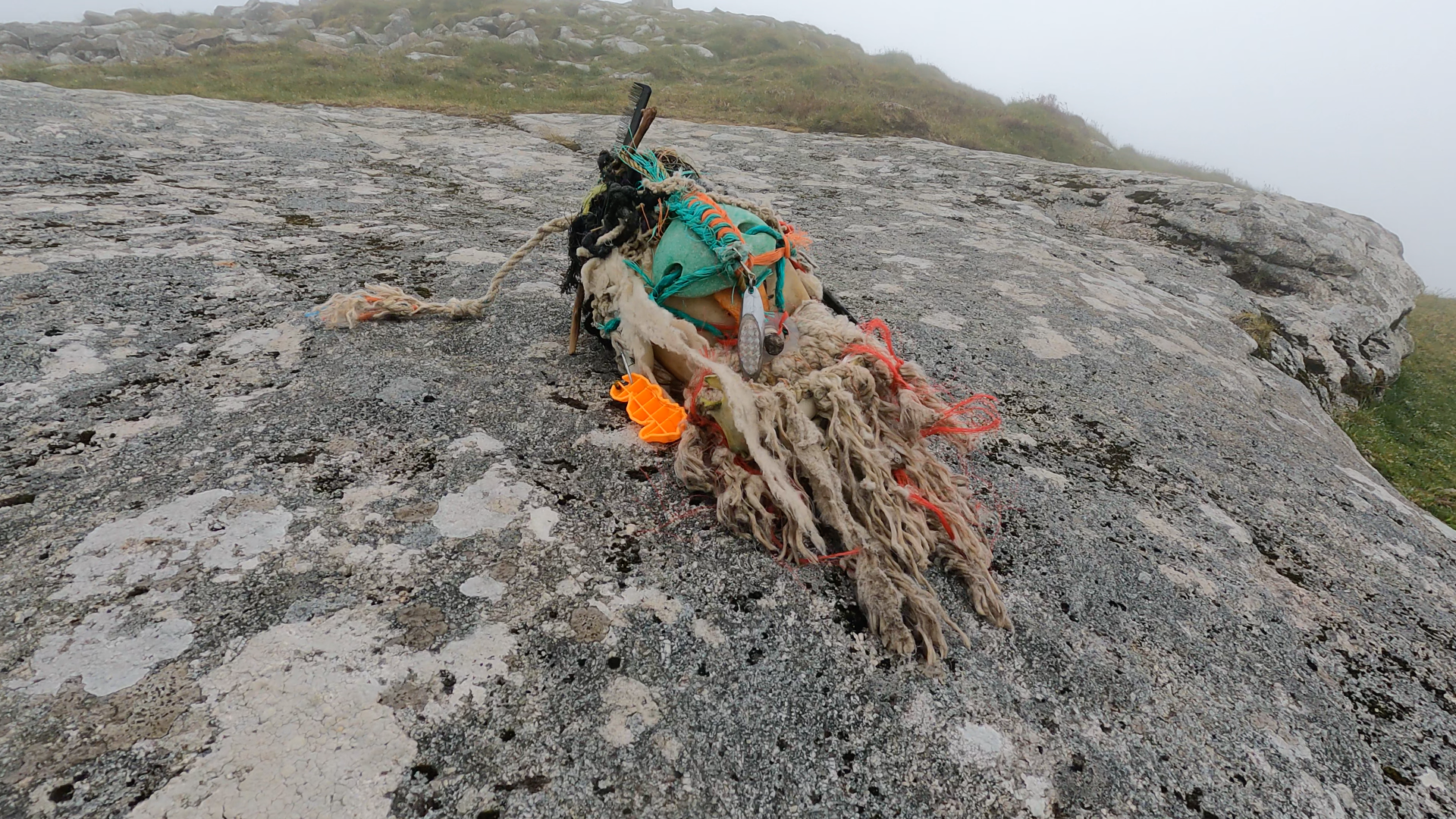

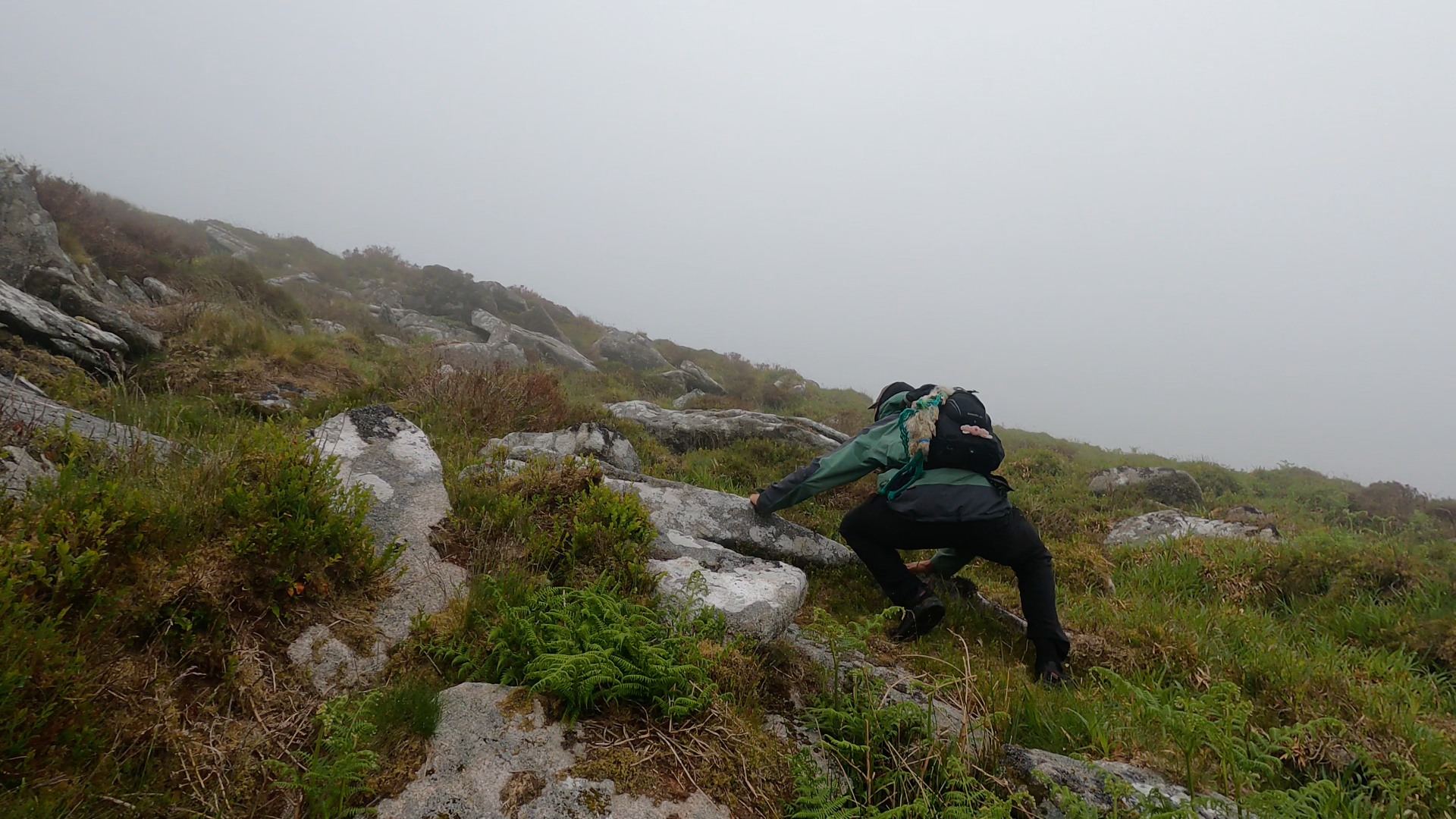
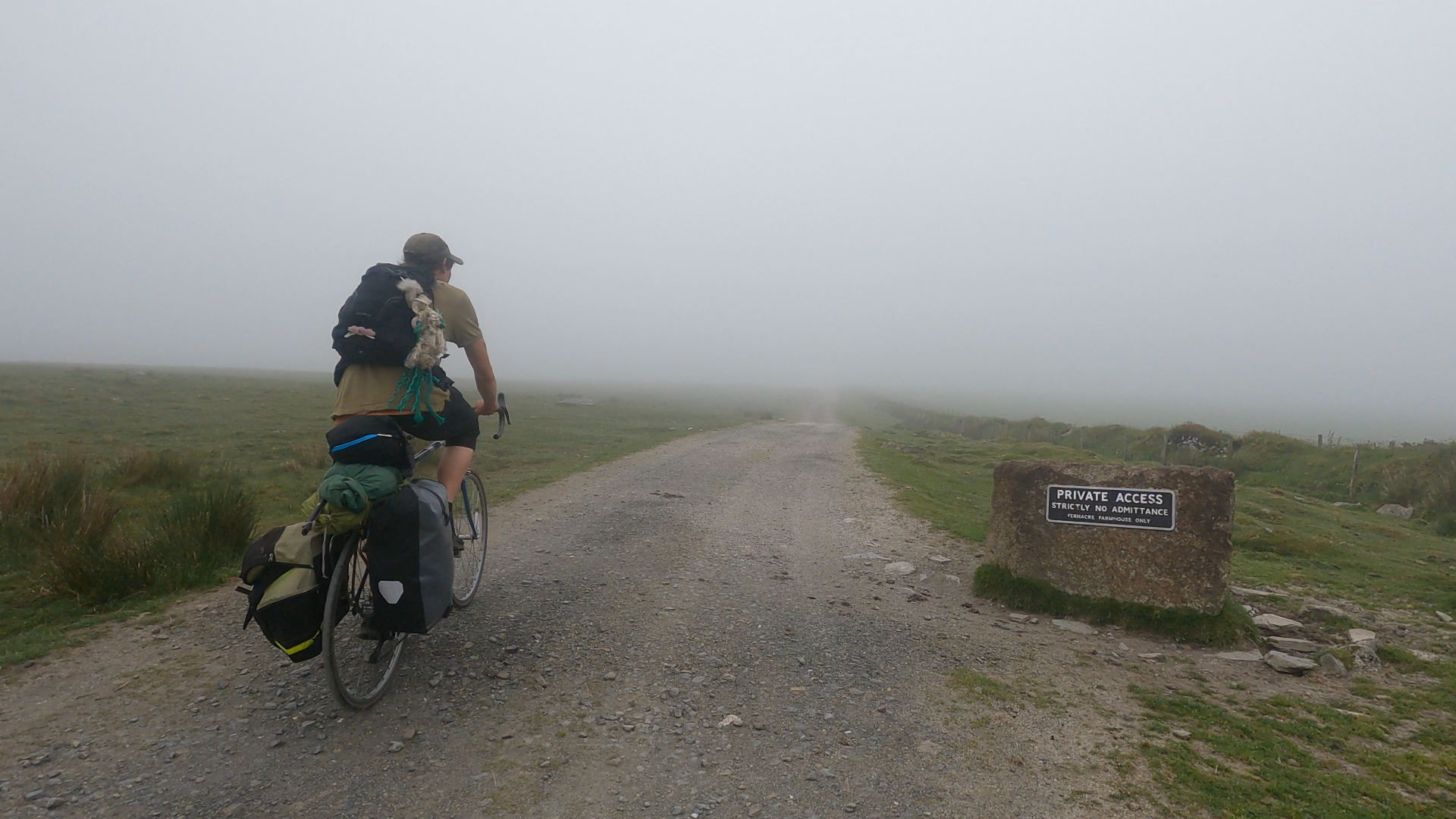

Lifted to the summit of Brown Willy, 420 metres above the sea, Sheepy was carried across the windswept expanse of Bodmin Moor and washed in its ancient waters.
Laid upon granite older than memory itself, the Ghost Gear Poppets rested amongst stone and sky, carrying the messages of the Ocean Deep to the ancestors of old.
Each poppet had a name and a character of their own. Sheepy travelled with my brother Nathan, becoming more than a sculpture; a companion for the journey. Made from ghost gear and plastic waste recovered from the coastline, Sheepy embodied a simple hope: that what is taken from the sea need not return as pollution.
Instead, Sheepy found a new life on land.
A small guardian. A travelling oracle. A reminder that even the most discarded materials can be transformed through care, story and imagination. Long after the pilgrimage ended, we hoped Sheepy would continue to wander with us, carrying the spirit of the coast without ever finding their way back into the waves.
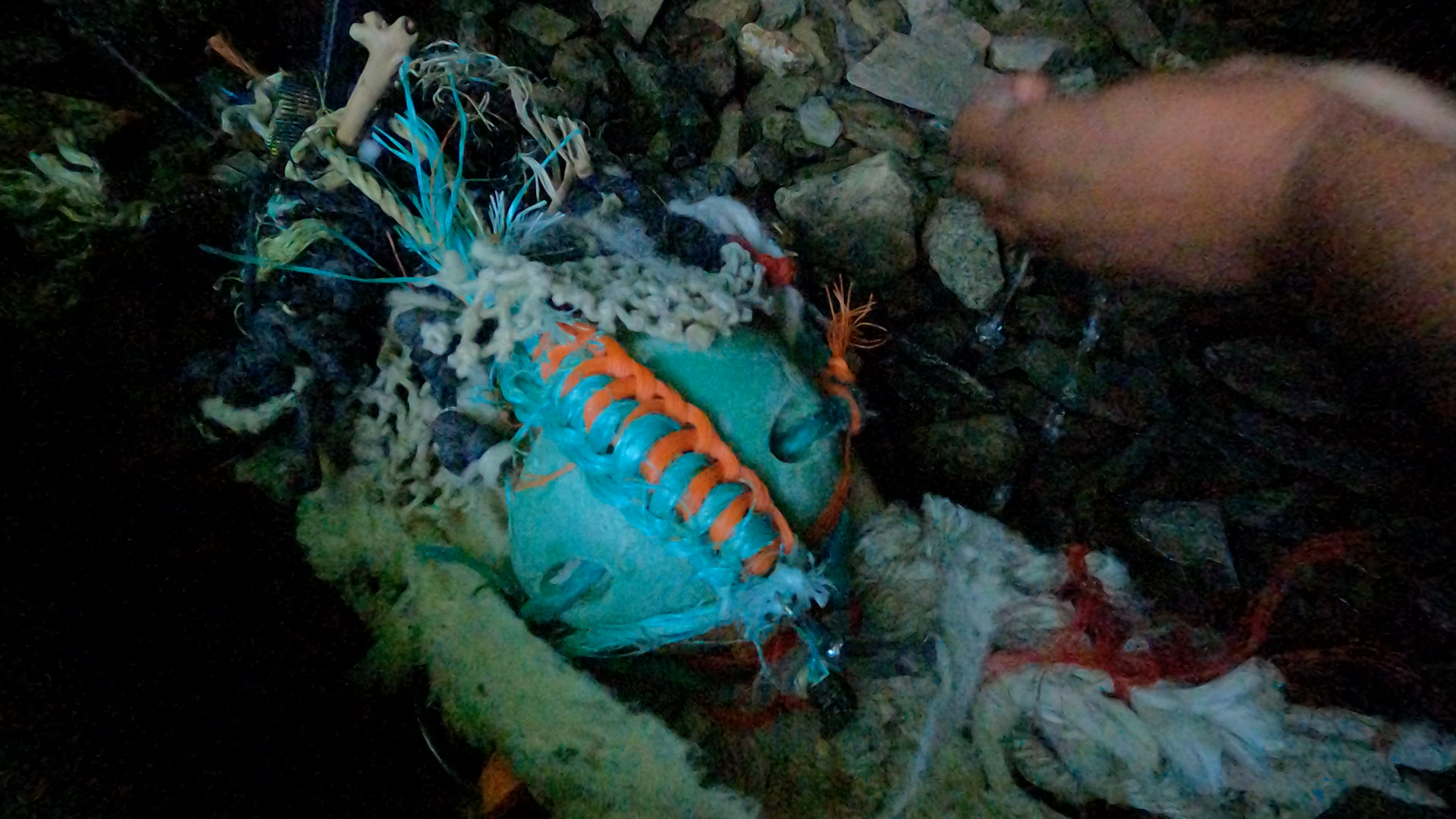
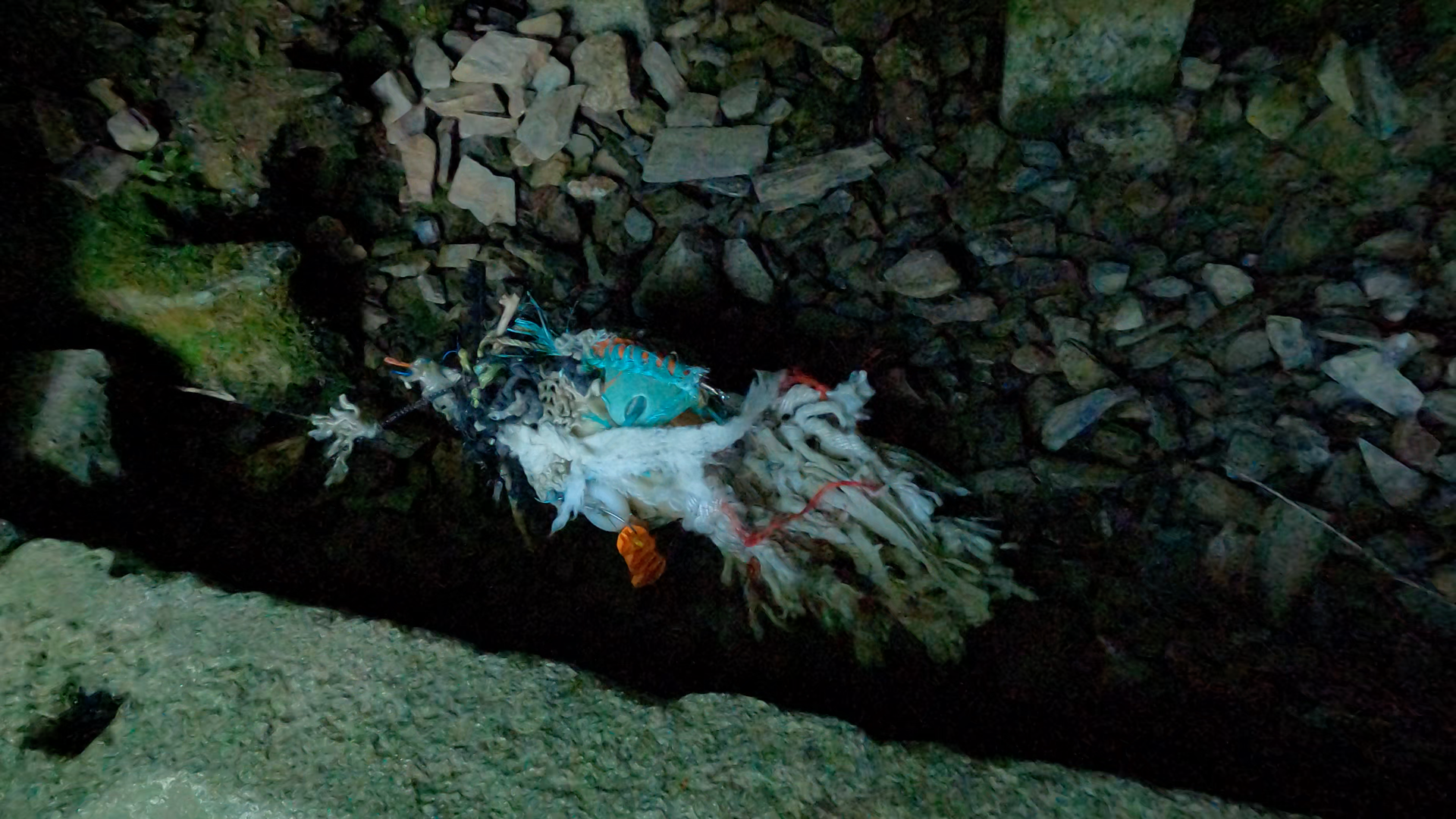
The Washing of the Oracle
The Ghost Gear Oracle was washed in water drawn from sacred wells and holy springs across Bodmin Moor.This was not an attempt to erase the material's history, but to acknowledge it.
Plastic begins its life as oil; a substance formed from the remains of ancient marine organisms laid down beneath prehistoric seas. In a strange sense, the Oracle had already come from the water. Long before it became rope, net or fishing gear, it was part of an ancient ocean world.
Lost to the sea and recovered from the shoreline, the material carried the marks of another journey; one shaped by extraction, industry, consumption and pollution.
The washing became a small ritual of transformation.
Across Cornwall, sacred wells have long been places of blessing, healing and renewal. People leave offerings, make wishes and seek guidance from waters believed to hold memory and spirit. By carrying the Oracle to these springs, we brought together two very different stories of water: one ancient and life-giving, the other entangled with the environmental challenges of the present.
The holy water could not change the material itself. The plastic remained plastic.
But perhaps it could change its meaning.
Through care, pilgrimage and storytelling, a material destined to drift endlessly through the world's oceans was given another future. The washing marked a transition from waste to witness, from ghost gear to guardian.
