Grace Emily Manning
Artist
About
︎
Grace Emily Manning
Artist
About
︎
Projects for Landscapes
Golden Valley, Herefordshire The Golden Valley Sundial Project
Cerne Abbas, Dorset Consequences - Radical Ritual
Consequences Workshops
Birmingham & The Black Country
Alders of Woodbrook
The Walsall Camel Sanctum Cloth
Sanctum of The One Eyed Toad with General Public
The Birmingham Allotment Project
TBAP Dye Process
Swanscombe Marshes, Thames Estuary, Kent
Swansula
Swansula Quartz
Relics of Estuarine Magic
Swansula Sail
Muggins
Brownfield Sister
Flint Instrument - Sum Of All It’s Past
Plastic Bone
LUNMES 2045
Padstow, Cornwall
The Tales of Cetus
The Plastic Age
Ghost Gear Poppets
Cetus Belly Of The Whale
Glastonbury, Somerset Wildflower of Avalon
Red List Mother
The Park Macrame
Installation
Choose Love - The Light WithinKite Spirit and
The Patchwork
Storytelling Quilt with
Sita Brahmachari
Drawing
Drawings, 1Drawings, 2
Concept / Technical
Painting
Blue Nacres in MoonlightIris 1,2
Overview
Cultures
Untitleds
Moving Image
RoseTale of Pupa
White Moths
Inside Tide
Embodying Voice
Central Vessel
Patchwork Storytelling
Project
Worry Angels
The Art of Transatlantic
Inclusion
GEM Eco Studio
A material studio working with plant, pigment and placeNatural dyes · Art materials · Workshops · Commissions

Swansula
A site-specific world-building project for Swanscombe Peninsula, North West Kent.
Swansula is a portmanteau of Swanscombe Peninsula - a triangular post-industrial landscape on the Thames Estuary, formed from a biodiverse mosaic of marshland, scrub, wetlands and brownfield habitat, hugged by the River Thames.
Surrounded by industry, much of the land was left unmanaged for over thirty years, allowing nature to take hold. It has become home to migratory species, wetland birds and rare insects, forming part of a wider network of wildlife moving along the Thames Estuary and beyond.
Swansula is the overarching name for an ongoing world-building project drawn from this landscape, imagining a radically artistic and ecological future for the peninsula.
Through moving image, sculpture, sound, drawing, fictional archives and speculative artefacts, Swansula explores ideas of home, ecology, conservation, magic, sustainability, community, migration, isolation and the climate crisis.
The world has evolved through a series of interconnected projects:
Brownfield Sister, 2018
An early incarnation of Swansula, made in response to proposals for the London Resort development on Swanscombe Peninsula.
Swansula Quartz, 2020
A fictional time capsule containing a digital collection of artworks left behind by the future community of Swansula.
Relics of Estuarine Magic, 2021
A speculative archive of magical and ritual artefacts from the future, excavated from the fictional world of Swansula.
Relics of Estuarine Magic was presented online as part of the Thames Estuary Associated Programme in 2021.
Swansula, 2020
22.58m
Documentary of the project development conducted at The Royal College of Art
22.58m
Documentary of the project development conducted at The Royal College of Art


Swansula Vision
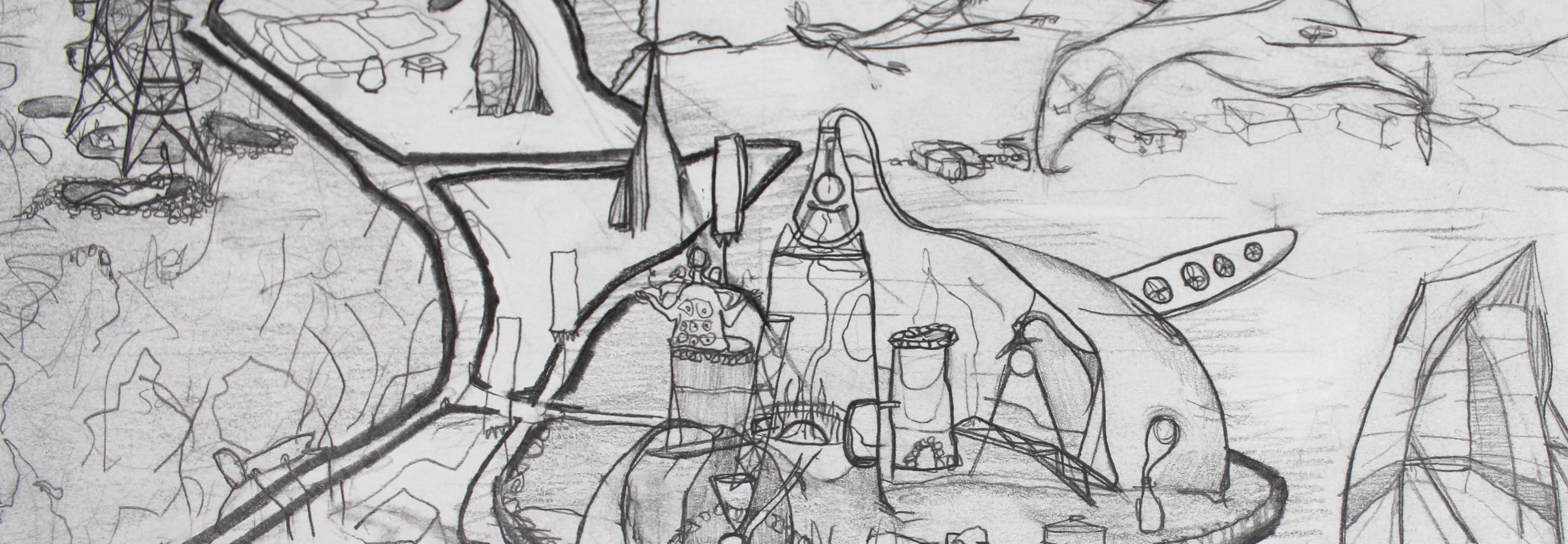
An unfinished speculative map of Swansula, begun during the Covid-19 lockdown while the project was being developed at the Royal College of Art.
The map became a way of trying to hold the entirety of Swansula at once - not as a plan for what would be here, but as a piece of Lunasaw thinking: what could be here? How much could disappear beneath marsh and bog? What might an ecological industry look like? Could this fantastical level of making, living and ritual become self-sustaining?
Across the map, waste plastic is recycled and extruded into structures for dwellings and trade along the estuary, combined with intertidal mud cob gathered from the landscape. Waters are clean enough for pods of dolphins to return and play around the Dolphin Filtration Dye Temple, where water is filtered and circulated through natural dye processes.
The disused Thames Crossing pylons remain above the reeds, transformed into temples where projected deities appear through animation and a deep faith in nature is practised. Biomimicry extends into the infrastructure itself: self-sufficient carbon-capture systems take the form of Black Ducks, while energy is drawn from water and wind.
Making the map began to shift Swansula further into the future and became the starting point for Relics of Estuarine Magic. I began to imagine that the map itself might be something found - an incomplete trace of how the Lunasaws once imagined their world.
Swansula was no longer only a proposition for 2045 or 2099. It became a world for the plastic age and a much deeper future, where deep past meets deep future.
The marsh makes this leap possible. Its energy and materials, its accumulated layers of industry, ecology, archaeology, history and folklore allow the imagination to move across enormous stretches of time - asking not simply what might happen to this landscape, but what kinds of worlds it might still contain.
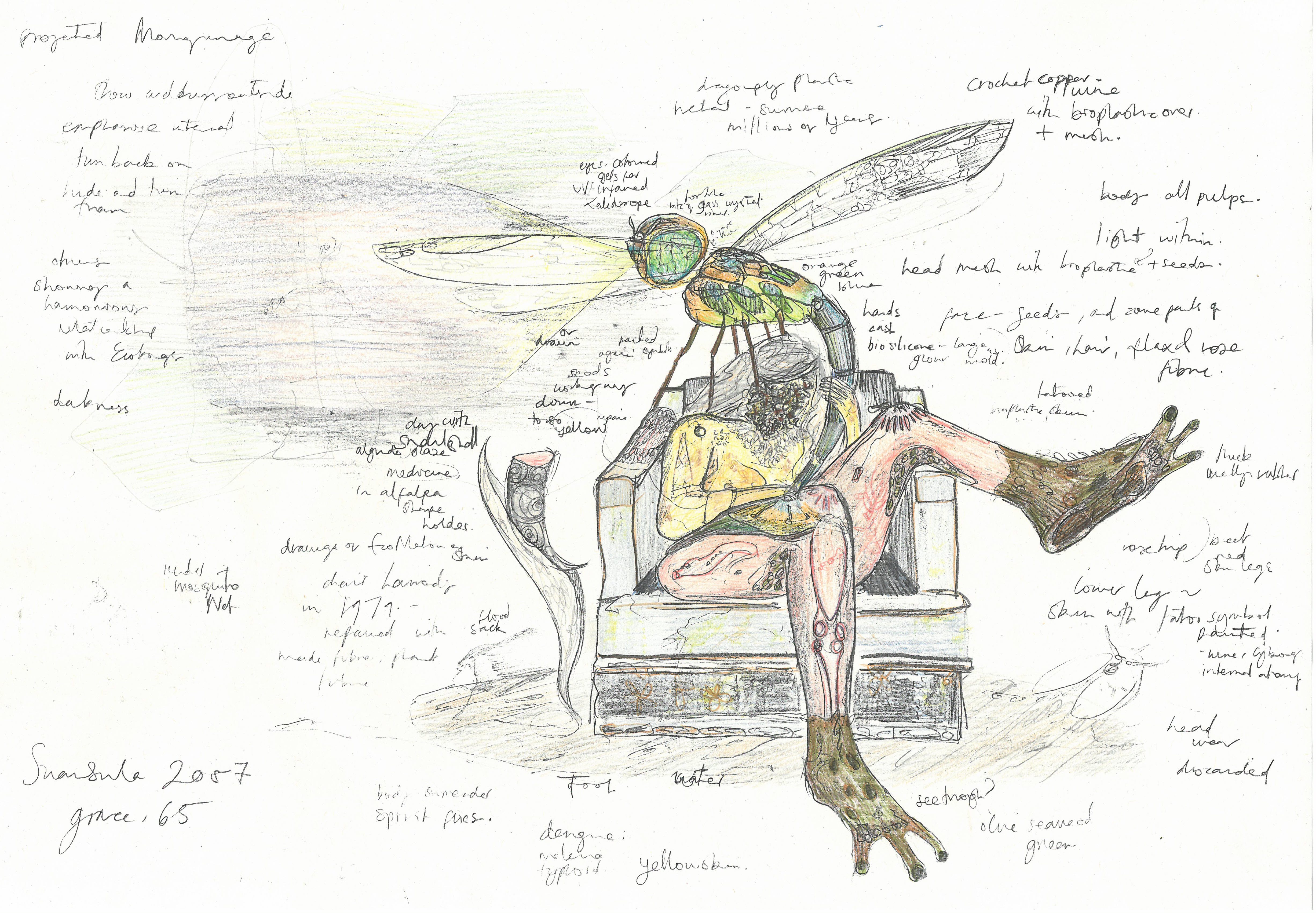
Grace at 65, 2057. 2019
Sketch for human scale narrative sculpture with moving image projected from dragonfly lens.
Grace at 65, 2057
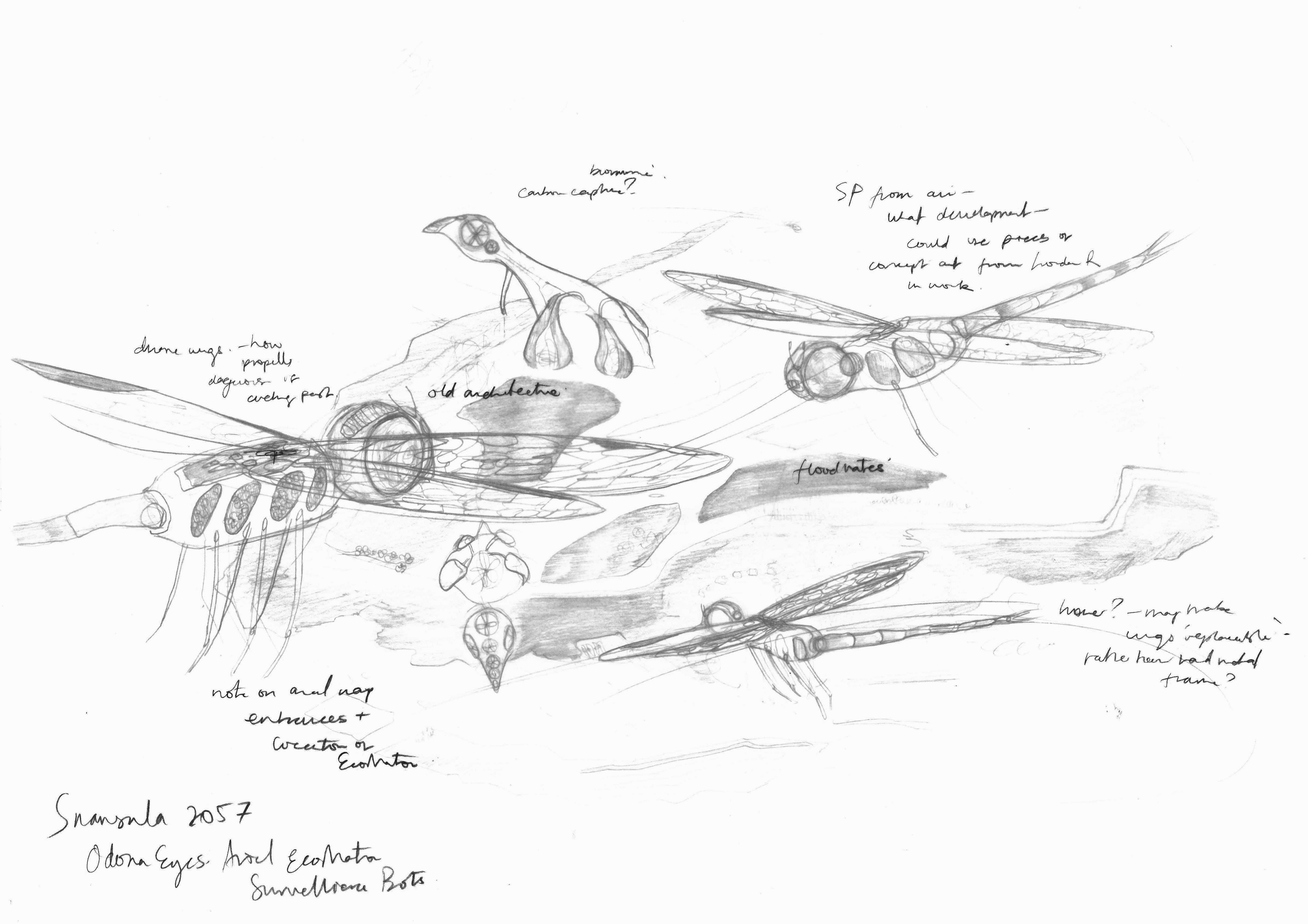
Sketch for a human-scale narrative sculpture with moving image projected through an Odona Dragonfly Eco-Maton conservation drone.
This was an early drawing for what I imagined would become one of the final physical works of Swansula at the Royal College of Art. I placed myself directly into the future of the project, Grace at 65, in the year 2057, inhabiting Swansula as part of the Lunasaw community rather than observing the world from outside it.
The figure was conceived at human scale, with moving image projected through the lens of an Odona Dragonfly Eco-Maton, bringing together my own ageing body, speculative conservation technology and the ecology of the marsh.
The sculpture would have been accompanied by the song To Swansula, later preserved within Swansula Quartz. The song brought a deeply personal narrative into the world, allowing the Lunasaws to exist emotionally as well as ecologically. They weren't only conservationists, material makers and harvesters working in service to the landscape; they experienced longing, devotion and isolation within it. This began to complicate the idea of Swansula as a utopian bog community - asking what it might actually feel like to belong to this place and to one another.
The sculpture was never realised in this form. When the Covid-19 pandemic interrupted the project, Swansula had to adapt. The physical world I had been building became increasingly digital and dispersed, and the project shifted towards telling this future through fragments of moving image, sound and messages preserved within a fictional digital time capsule Swansula Quartz.
The drawing remains an early trace of that transition, and of my attempt to physically place myself within the future I was imagining.

Swansula’s Eco-Matons
Swansula’s Eco-Matons are radical ideas for rewilding automatons, inspired by the prehistoric wildlife of Swanscombe Peninsula.
Fantastical sci-fi eco-bots, they are imagined as being made from waste and plant-based materials, designed to fill extinct ecological niches within the landscape. As they move through Swansula, they harvest and process the natural materials they ‘eat’ - digesting organic matter and transforming it into new materials.
A coming together of wildlife and industry.
The Eco-Matons grew from research into the use of technology in wildlife conservation, sustainable bio-based future materials and their processes, biomimetic design, and the artificial or augmented forms of nature being developed in response to the climate crisis.
They imagine a future in which technology does not sit apart from the ecosystem, but becomes entangled with it.
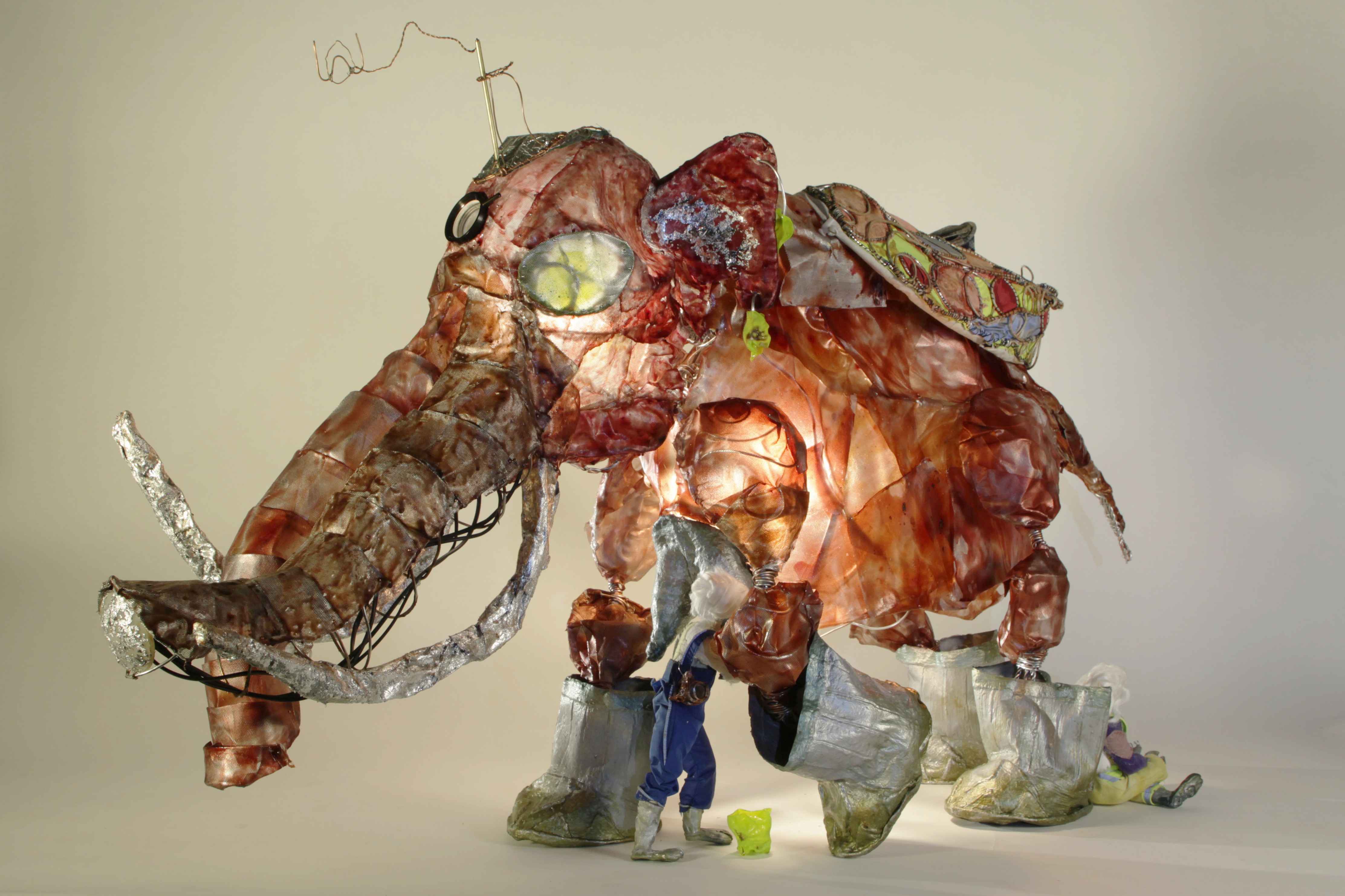
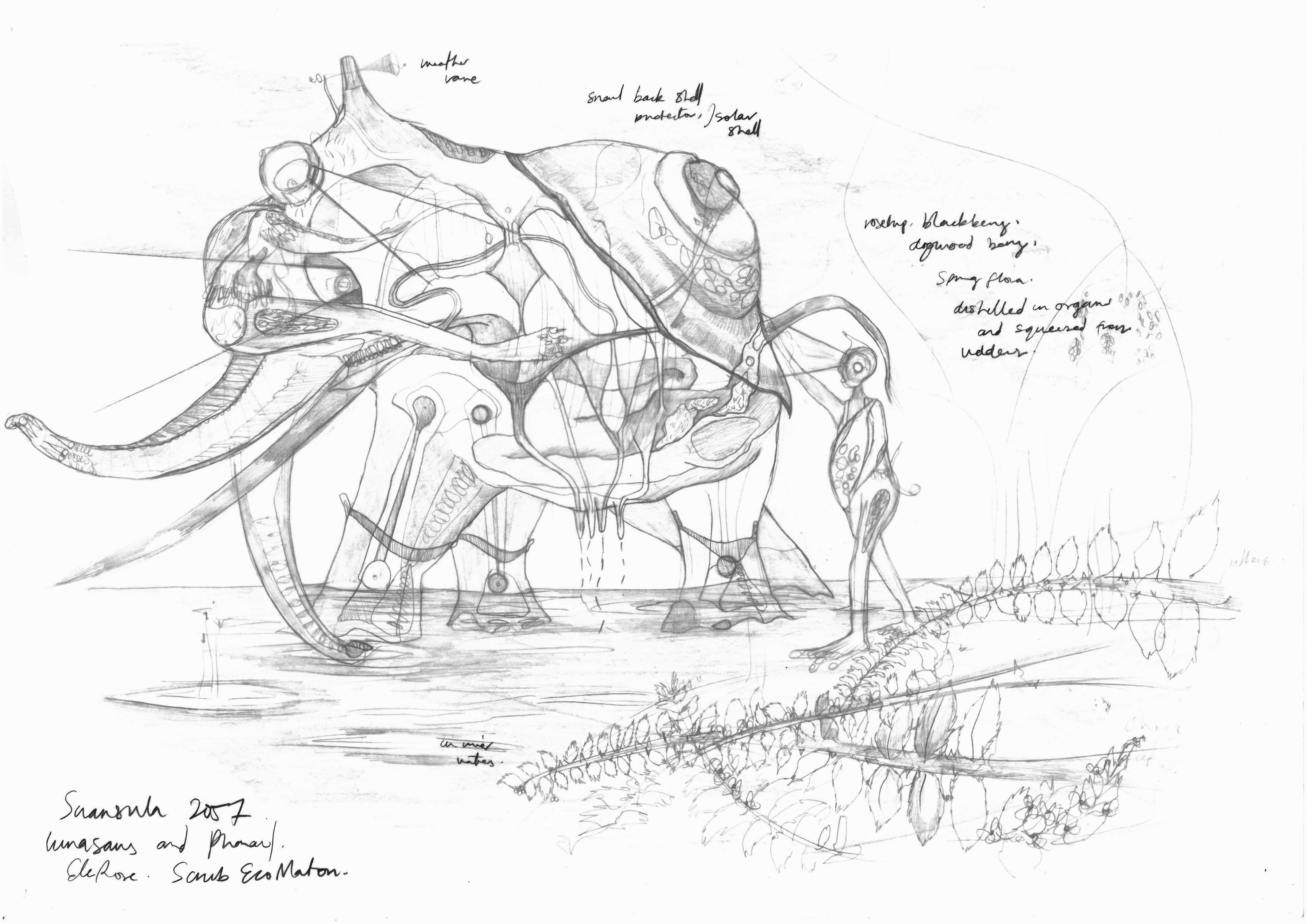
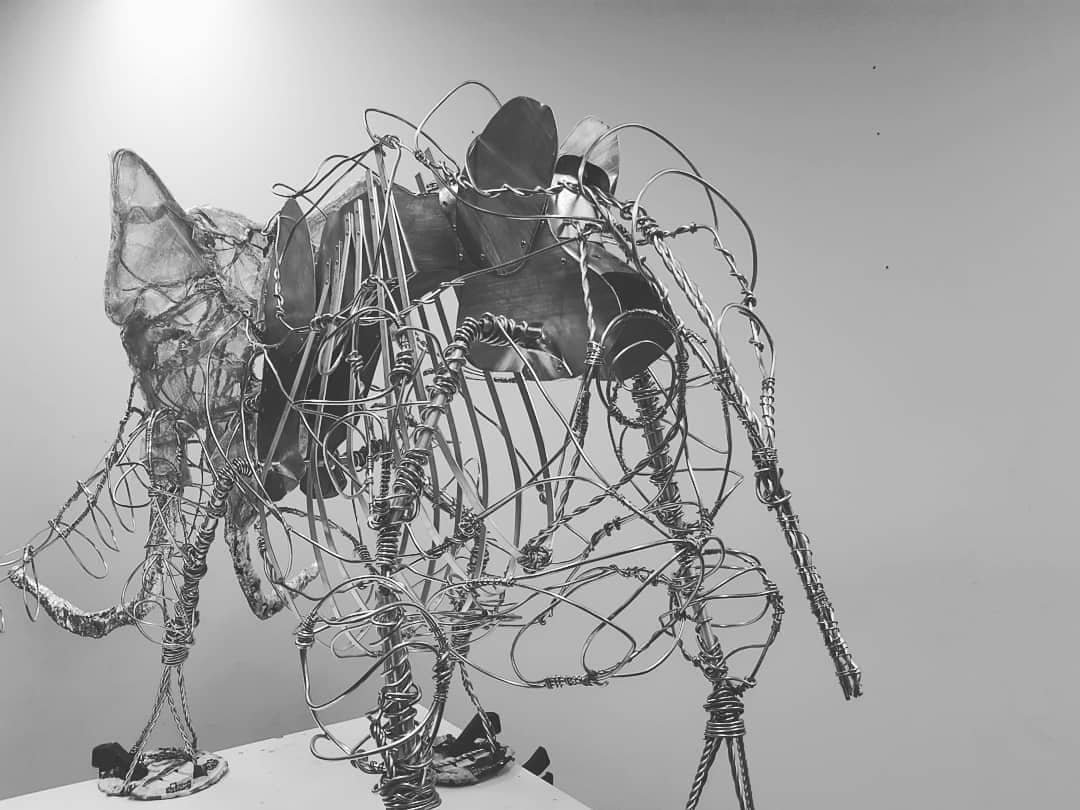
Eco-Maton Phanti, 2020
Stop-motion Animation Puppet
120cm x 50cm x 150cm
Beetroot, blackberry and madder root bioplastic, aluminium, silver, copper, brass, rose fibre, natural rubber, linen dyed with weld,recycled textile, found plastic, recycled OHP lens, copper, brass
Eco-Maton Phanti
Eco-Maton Phanti is based on the Ebbsfleet Elephant, a prehistoric straight-tusked elephant that lived in the landscape around Swanscombe during the Lower Palaeolithic period.
These large creatures would have disturbed and opened up scrub as they moved and fed, helping to create a shifting balance of habitats. Today, generally, scrub clearance on marshes is carried out by conservationists on to help maintain the wetland ecosystem.
Phanti exists in an imagined future where bio-based machines work alongside humans in the conservation of the landscape.
Moving through the scrub, Phanti chews and processes raw plant material while distilling hawthorn and rosehip syrup. The digested material is discharged behind the Eco-Maton, where it is collected by human hands and used to make new materials.
Part prehistoric elephant, part machine, part mobile material-processing system, Phanti reimagines an extinct inhabitant of the landscape as a participant in its future ecology.
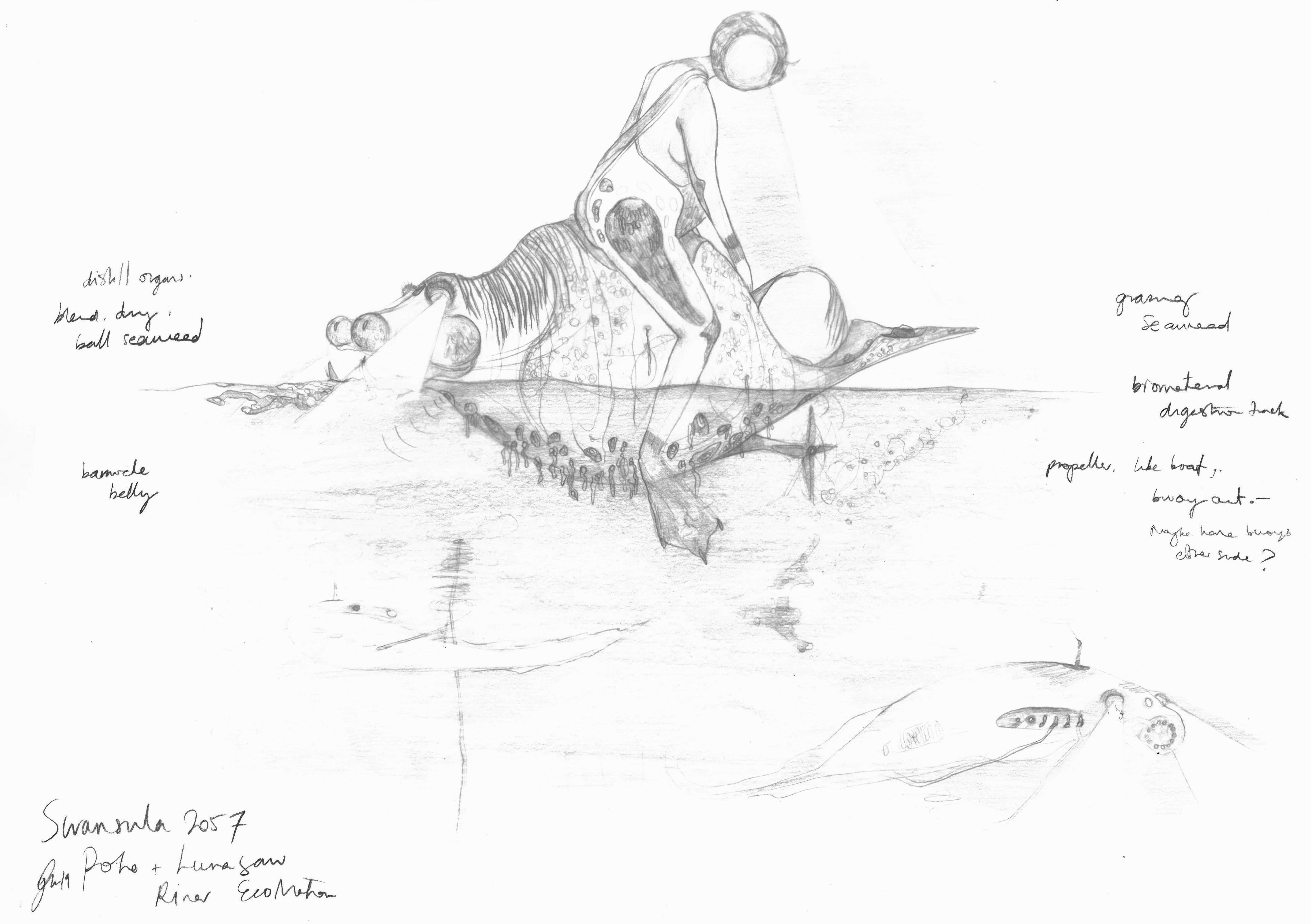
Poto, 2019
Initial design sketch for Poto, River Thames Eco-Maton. Based on the hippopotamus, a species that once inhabited the River Thames and its surrounding landscape.
Poto grazes on seaweeds, shredding and churning the plant matter through its body before defecating the processed material. This is harvested by the Lunasaw community and used to create new regenerative materials.
Part animal, part machine and part living processing system, Poto imagines an extinct inhabitant returning to the Thames in a new form - transforming what it consumes into material for future life and making.
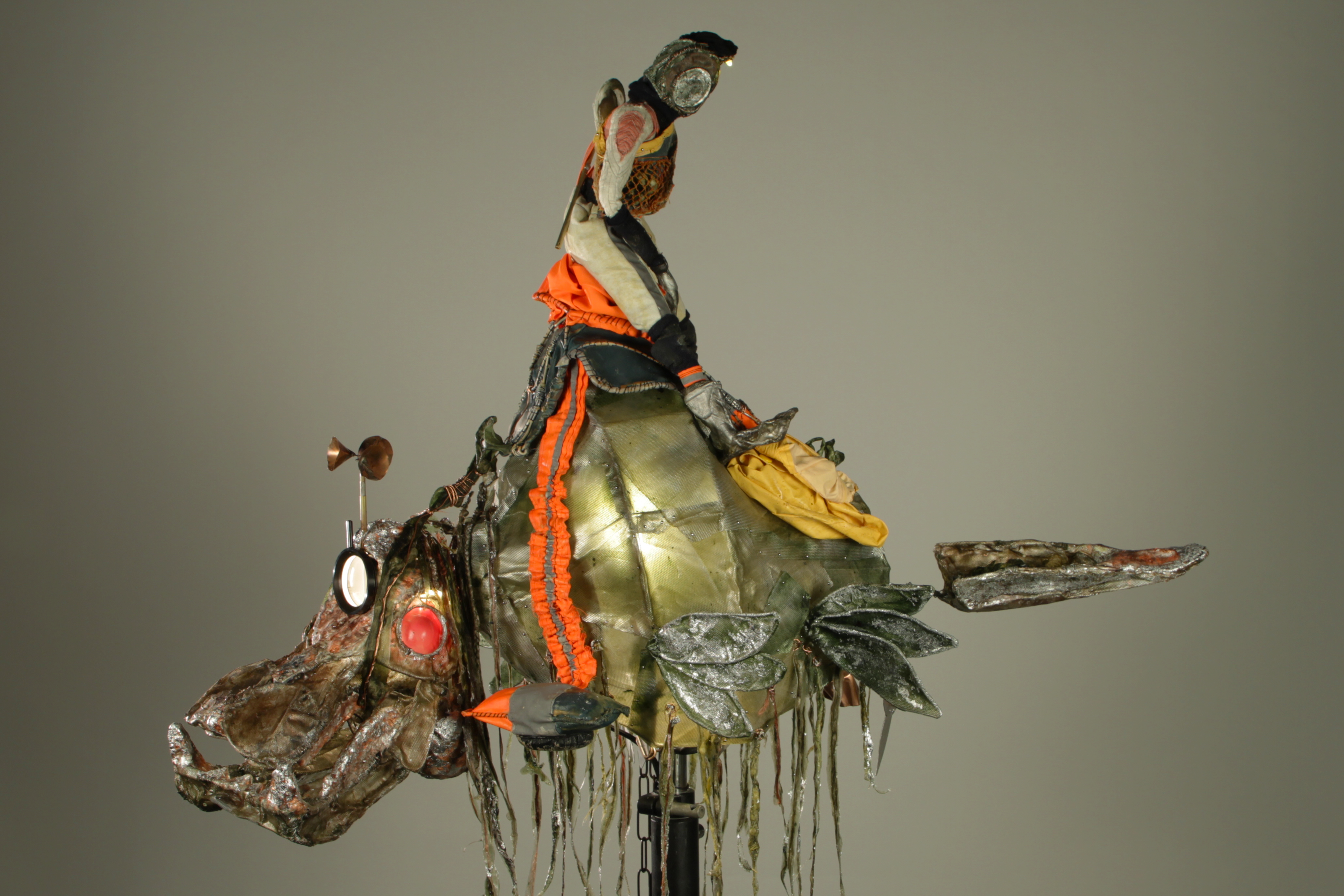


Stop-motion puppet. 120cm x 140cm x 50cm
Agar based bioplastic dyed with chlorella, recycled metal, linen dyed with weld, madder and blackberry, latex, recycled textile, waste machine parts, LED light, copper, brass, waste plastics
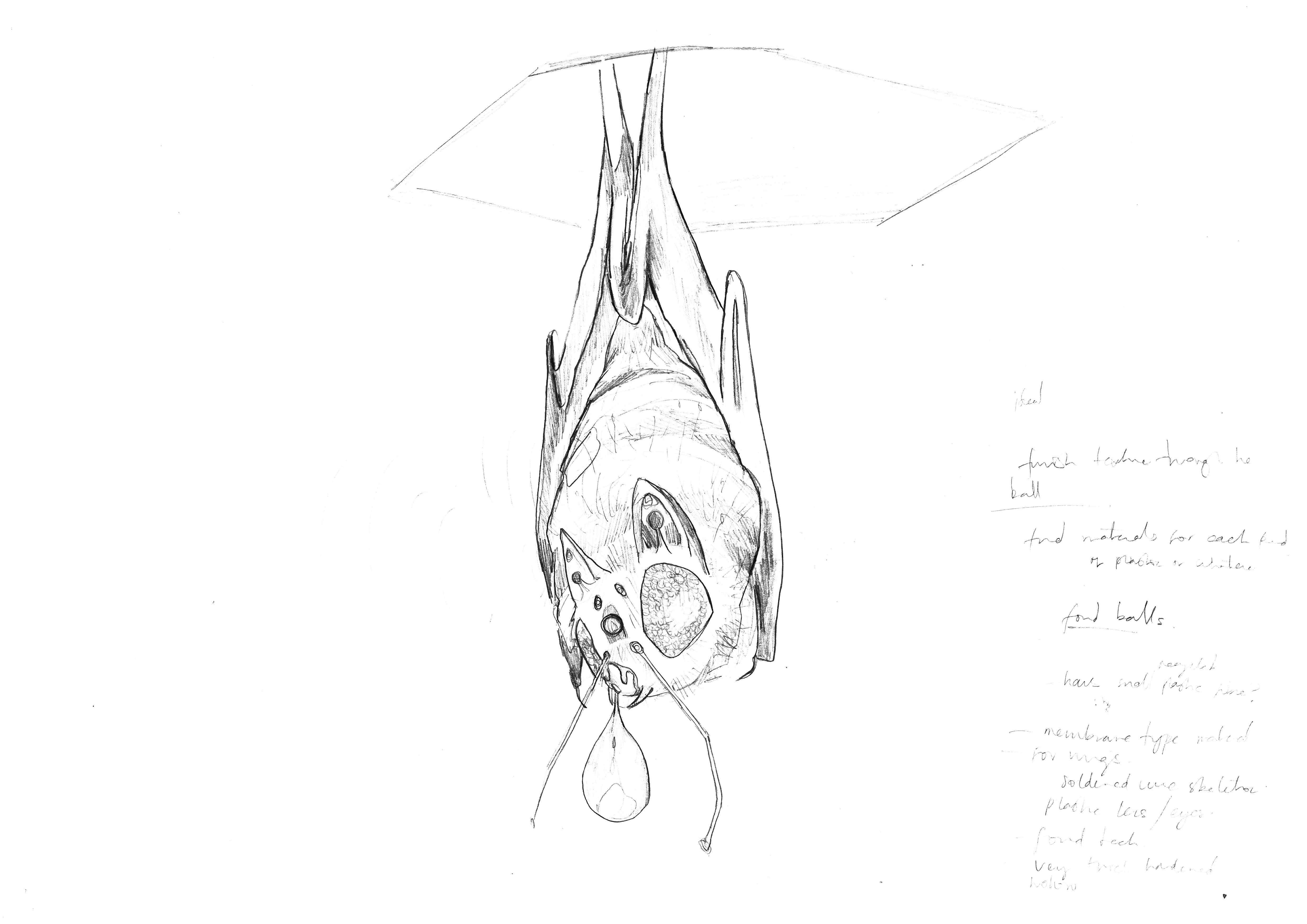
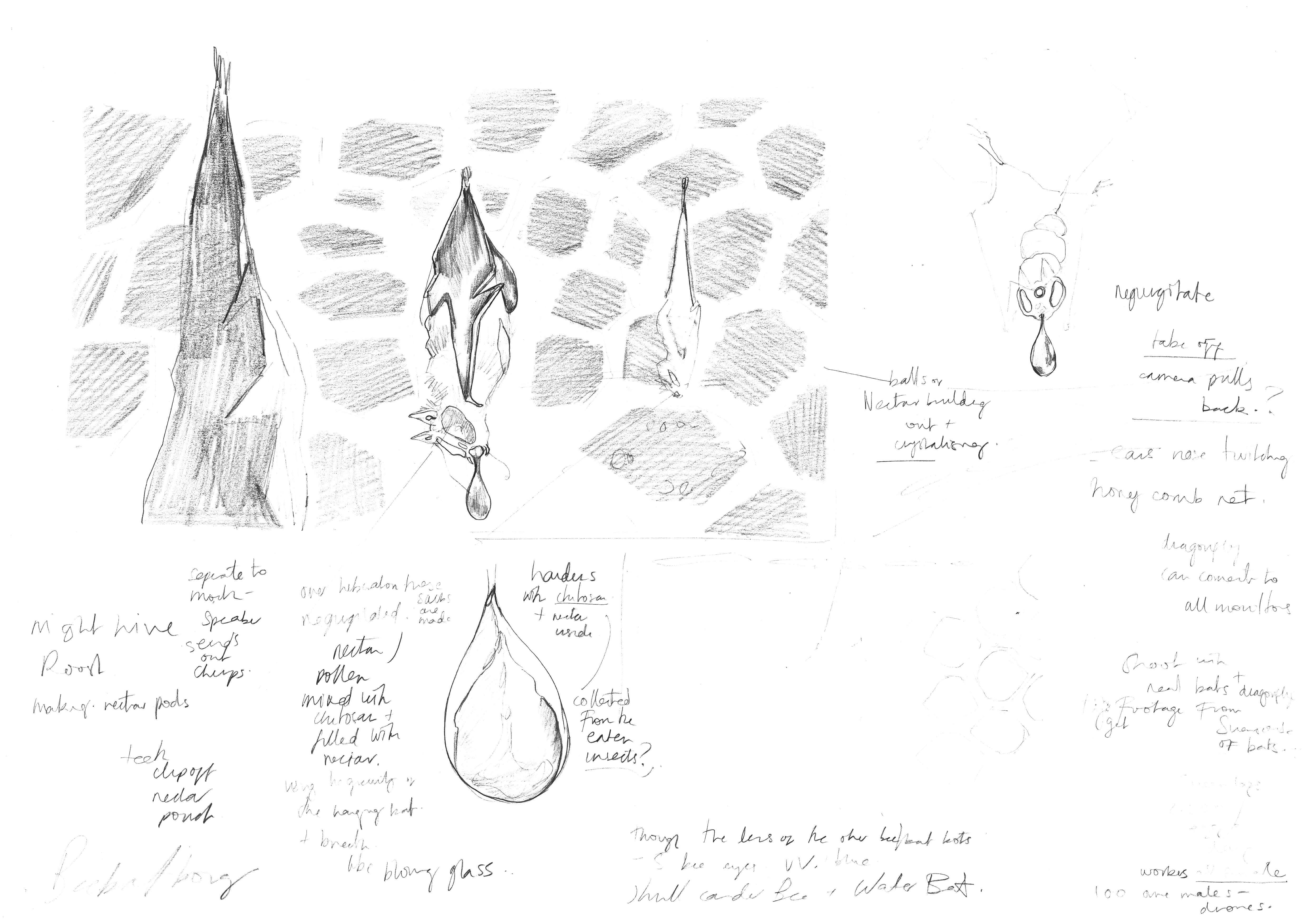
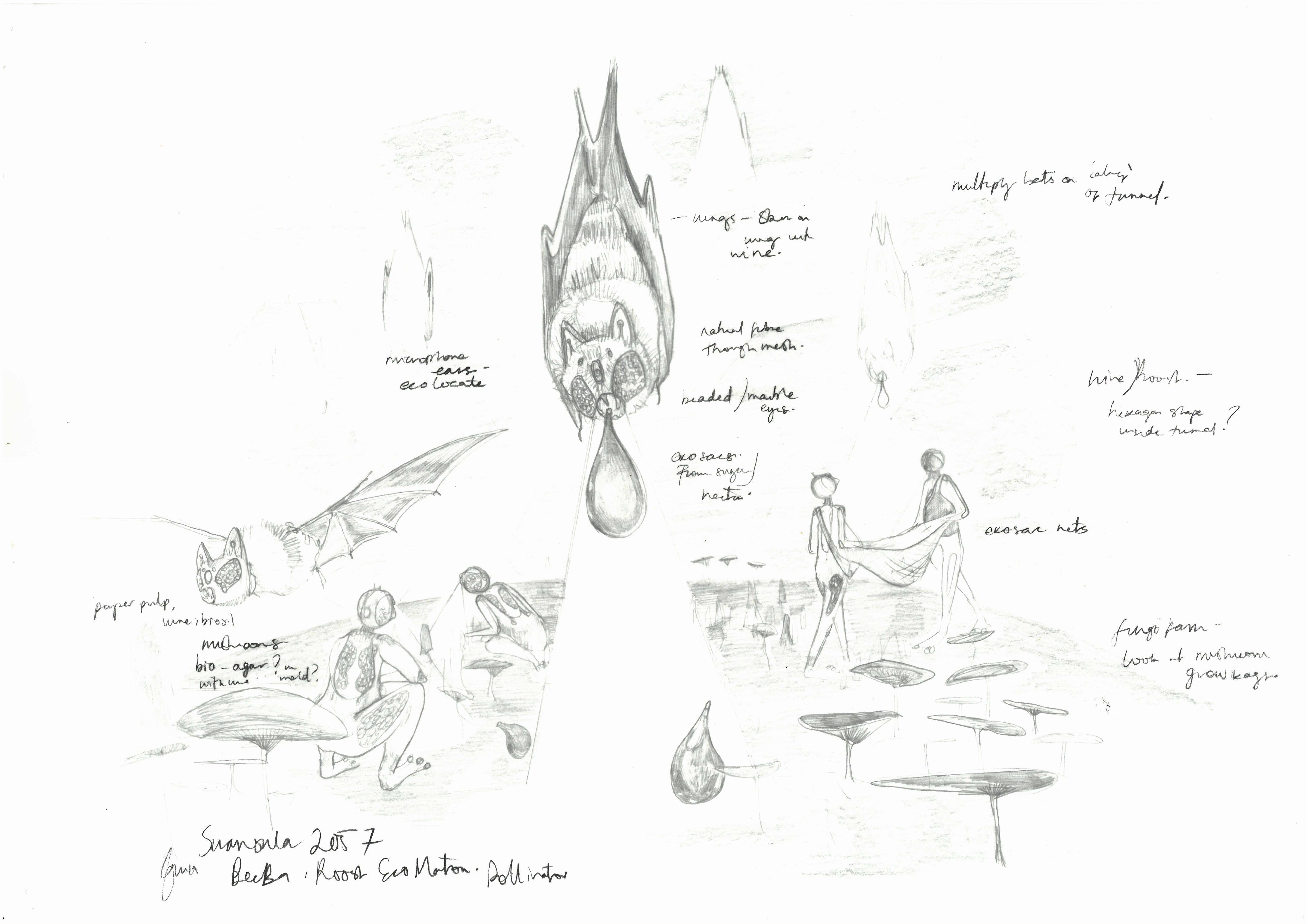
BeeBa, a pollinating Eco-Maton, secretes a nectar-based bioplastic from its nose as it hangs within a disused HS1 railway tunnel beneath Swansula.
Inspired by pollinating species and their role within interconnected ecosystems, BeeBa imagines a future creature that both supports plant life and produces regenerative materials for the Lunasaw community.

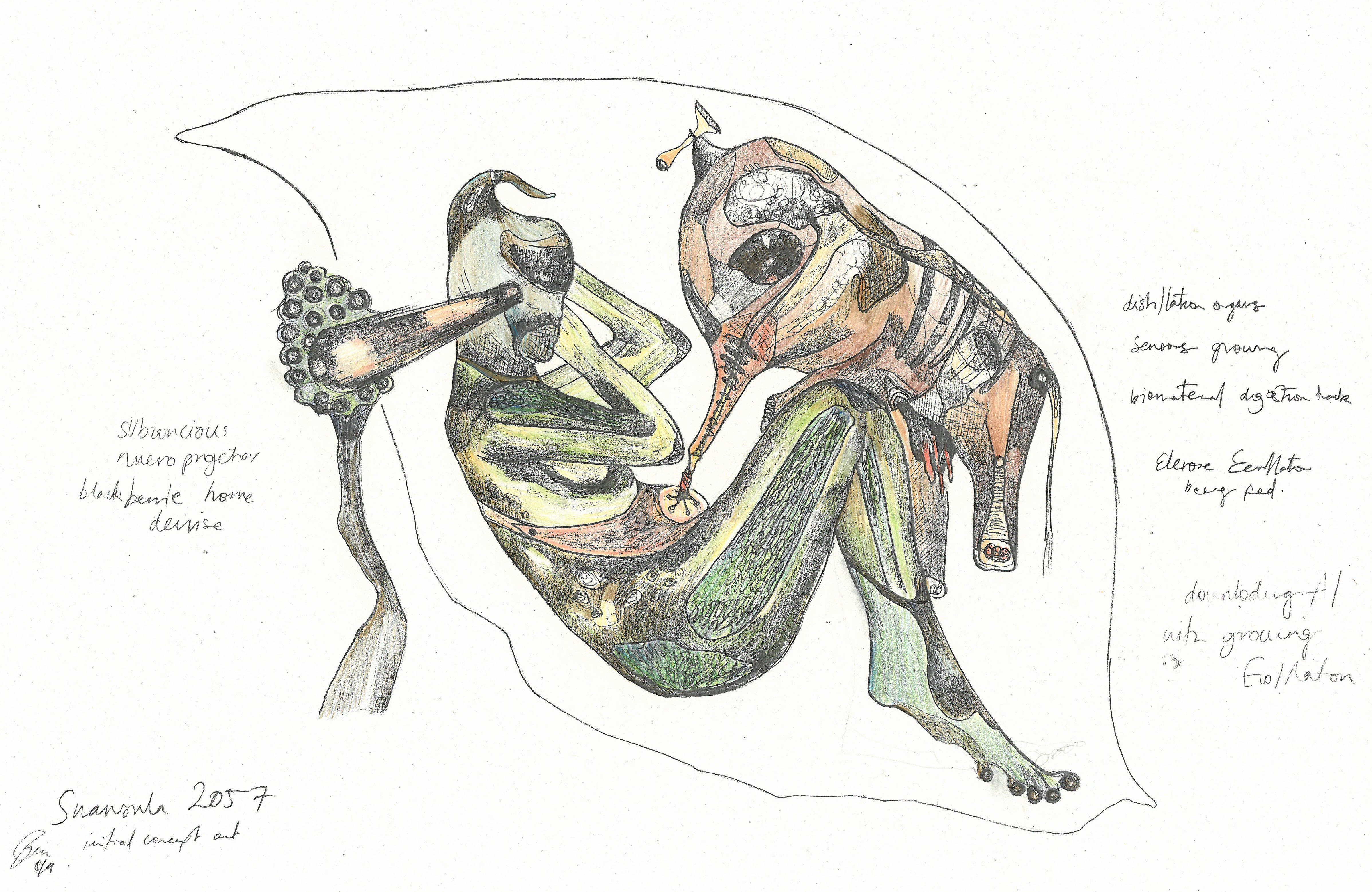
Growing a Eco-Maton
This drawing explores the idea that Swansula’s Eco-Matons are grown, rather than constructed like machines or traditional automata. Their flesh is the biomaterial from which they are made.
The Eco-Matons are fed information with which to grow through a charging and feeding belt worn by a Lunasaw - the collective name for members of Swansula’s future community.
The work explores the emotional connection between humanity and technology, and the idea of automata and AI as surrogates for human relationships.